
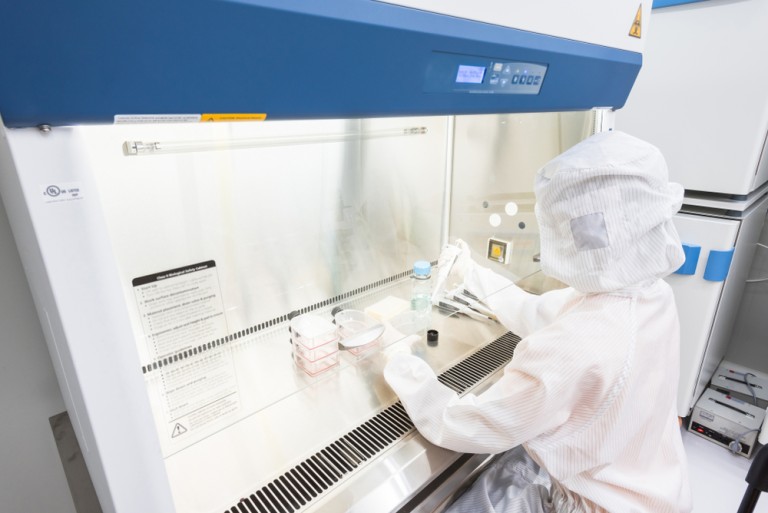
USP published a major revision to General Chapter <797>, Pharmaceutical Compounding –Sterile Preparations, on November 1, 2022. The revised chapter became official on November 1, 2023, and replaced the 2008 version.
USP <797> applies to people and locations that prepare compounded sterile preparations (CSPs) for human or animal patients. This includes pharmacies, hospitals, infusion facilities, physician practices, and other healthcare settings. State boards of pharmacy and other authorities determine how and when the chapter is enforced.
What Changed in the 2023 USP <797> Revision?
The revision reorganized sterile compounding requirements around CSP categories, beyond-use dates, personnel qualification and contamination-control practices. The most important changes for many facilities include the following.
1. CSP Categories and Beyond-Use Dates
The former low, medium, and high-risk levels were replaced by Category 1, Category 2 and Category 3 CSPs. These are categories based primarily on the conditions under which a CSP is prepared and the time within which it is used, not a simple ranking of patient risk.
Category 1 CSPs have the shortest allowable BUDs and may be prepared in a segregated compounding area. Category 2 CSPs are prepared in a cleanroom suite and may receive longer BUDs. Category 3 permits BUDs beyond Category 2 limits only when the facility meets additional requirements for sterility testing, stability, garb, personnel qualification and environmental monitoring.
BUD assignments are not based on category alone. The preparation method, starting components, storage temperature, sterility and endotoxin testing when required, container-closure system and available stability data must also be considered.
2. Personnel Training, Garbing and Competency
Anyone entering a sterile compounding area must follow the chapter's hygiene and garbing requirements, even if that person is not preparing CSPs. Facility procedures should therefore address pharmacists, technicians, cleaning staff, certifiers, vendors, and other personnel who may enter the area.
Personnel who compound Category 1 or Category 2 CSPs must complete garbing and aseptic-manipulation competency evaluations at least every six months; Category 3 compounders must complete them at least every three months. Personnel who have direct oversight of compounding personnel must complete an aseptic manipulation competency evaluation annually. The written training program should define the required knowledge, skills, evaluation methods, and records for each job function.
3. Facility Certification and Dynamic Testing
Compounding areas must be independently certified before use, at least every six months, and after changes or events that could affect environmental control. The revision and supporting USP guidance emphasize testing under dynamic operating conditions. For total airborne particle counts, viable active air sampling and applicable airflow visualization studies, the test conditions should represent the expected personnel load and highest-complexity activities, not an empty room providing favorable conditions.
4. Environmental Monitoring and Cleaning
The revised chapter establishes defined minimum frequencies for microbiological surface sampling instead of the previous instruction to sample periodically. Category 1 and Category 2 facilities must perform surface sampling at least monthly. Facilities assigning Category 3 BUDs have enhanced environmental-monitoring requirements, including surface sampling at least weekly.
Facilities must perform viable air sampling in each classified area and develop a site-specific plan for locations and trending. Action-level excursions require investigation and corrective action; organisms recovered above an action level must be identified to the genus level when possible.
Cleaning and disinfection procedures must specify surfaces, agents, frequencies, and responsibilities. Sporicidal disinfectants must be applied at least monthly (or weekly if Category 3), and products used inside the primary engineering control must be sterile. Sterile 70% isopropyl alcohol is a sanitizing agent; it is not, by itself, a substitute for required cleaning, disinfecting or sporicidal treatment.
5. Immediate-Use CSPs and Quality Oversight
The immediate-use provision allows administration to begin within four hours after preparation starts when all stated conditions are met. It is not a blanket four-hour BUD for routine compounding or a workaround for preparing CSPs outside the required environment.
The revision also strengthens the role of the designated person, who is responsible and accountable for the facility's performance, personnel, procedures, records, and quality-assurance program. Facilities should compare their SOPs and actual practices with the revised chapter rather than treating certification as the entire compliance program.
Practical USP <797> Compliance Priorities
A useful gap assessment should confirm the CSP categories and BUDs in use; personnel qualification records; facility and PEC certification; viable air and surface monitoring; cleaning and disinfection procedures; pressure, temperature and humidity monitoring; and documented investigation of excursions. Hazardous drug compounding must also meet applicable USP <800> requirements.
Pharmacy Compliance With Technical Safety Services
Technical Safety Services features deep expertise in pharmacy compliance, and we are prepared to assist you with any necessary changes or updates to your facility, processes and standards to maintain compliance with USP <797>. Since the previous official revision of USP <797> in 2008, we have worked with numerous facilities to adhere to these guidelines, and we have been ready since the announcement of these updates to help organizations remain compliant, safe and operational. To learn more, contact us today.
