
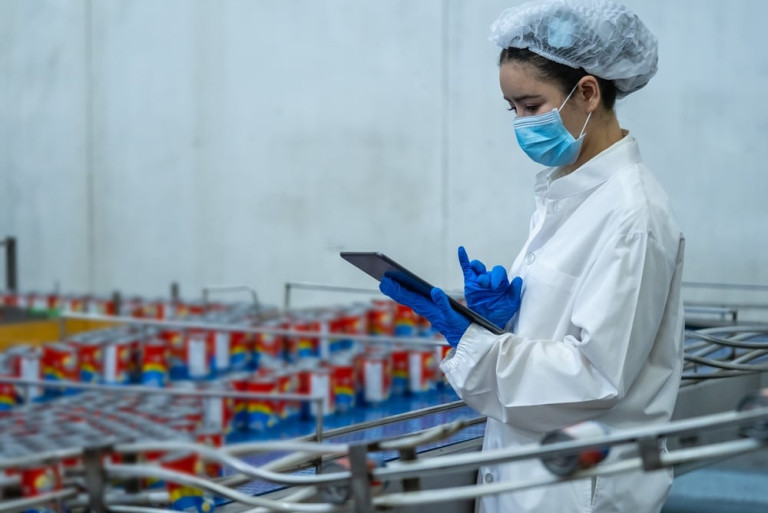
Good Manufacturing Practice (GMP) refers to the systems and controls used to ensure products are consistently manufactured and controlled for their intended use. In the United States, the Food and Drug Administration (FDA) commonly uses the term current Good Manufacturing Practice (cGMP or CGMP) to emphasize that manufacturers must use up-to-date methods, facilities and controls. GMP requirements help prevent contamination, mix-ups, errors, and other quality failures that finished-product testing alone may not detect.
What Does GMP Mean?
GMP is not one universal standard or checklist. The applicable legal requirements depend on the product and jurisdiction. For example, FDA drug CGMP requirements are primarily found in 21 CFR Parts 210 and 211, while medical devices, food and dietary supplements are governed by different regulatory frameworks. Industry standards and guidance may support compliance, but they do not replace the applicable regulations.
Why Are GMP Standards Important?
GMP controls build quality into the manufacturing process instead of relying only on final inspection or testing. An effective quality system helps manufacturers control variability, investigate failures, maintain traceability, and demonstrate that each batch or lot was produced under defined conditions. This protects patients and consumers while reducing the risk of recalls, shortages, rejected products, and regulatory action.
- Documented procedures and records: Approved procedures define how work is performed, while contemporaneous records show what occurred. Records must be accurate, complete, attributable, and retained as required.
- Facilities and contamination control: Buildings, utilities and production areas must be suitable for their intended use and maintained to prevent contamination and mix-ups. The necessary controls depend on the product, process, and risk.
- Materials and traceability: Components, containers, closures, in-process materials and finished products require appropriate identification, status control, testing or examination, storage and distribution records.
- Process and change control: Critical processes should operate within approved parameters. Proposed changes are assessed, approved, implemented, and, when appropriate, qualified or validated before routine use.
- Cleaning, sanitation and maintenance: Written programs help keep facilities and equipment in a condition that supports product quality. Cleaning validation is used where needed to demonstrate that a procedure consistently controls residues or contamination.
- Qualified personnel: Employees must have the education, training and experience needed for their assigned responsibilities, with training continuing as procedures, equipment and risks change.
How GMP Requirements Differ by Industry
The basic goal is consistent product quality, but the governing requirements and terminology vary. Organizations should identify the regulations that apply to their products rather than treating pharmaceutical GMP practices as automatically applicable to every industry.
- Pharmaceutical drugs: FDA CGMP requirements in 21 CFR Parts 210 and 211 address areas such as quality-unit responsibilities, facilities, equipment, components, production controls, laboratory controls, records and complaint handling. Both prescription and over-the-counter drugs are subject to drug CGMP requirements.
- Biologics and sterile products: Biological products are subject to applicable drug CGMP requirements and additional biologics requirements. Sterile manufacturing also requires a contamination-control strategy appropriate to the process. ISO 14644 may be used to classify and evaluate cleanrooms, but ISO classification alone does not establish GMP compliance or sterility assurance.
- Medical devices, food and dietary supplements: FDA's Quality Management System Regulation (QMSR), effective February 2, 2026, amended 21 CFR Part 820 and incorporates ISO 13485:2016 by reference for medical-device quality management systems. Human food is generally addressed under 21 CFR Part 117, while dietary supplement CGMP requirements are in 21 CFR Part 111. Cosmetics are subject to a separate and evolving framework under the Modernization of Cosmetics Regulation Act of 2022 (MoCRA).
Facility, Equipment and Environmental Controls
GMP does not require every facility to have a cleanroom or prescribe one universal qualification package. Controls should be based on the product, process, and contamination risk. Where controlled environments are necessary, the program may include HVAC and utility qualification, cleanroom certification, HEPA filter integrity testing, airflow and pressure verification, environmental monitoring, equipment qualification, calibration, preventive maintenance and periodic review. Installation qualification, operational qualification and performance qualification (IQ/OQ/PQ) are common lifecycle tools, but their scope should be justified rather than applied as a generic three-step requirement to every system.
Documentation, Data Integrity and Accountability
Documentation provides evidence that a process remained under control, and that quality decisions were supported. Requirements vary by regulation, but a mature GMP system commonly addresses the following elements:
- Procedures and production records: Controlled procedures, specifications, laboratory records and batch or production records document how the product was made, tested and evaluated.
- Quality review and release: For finished pharmaceuticals, 21 CFR 211.192 requires review and approval of production and control records, including investigation of unexplained discrepancies or batch failures, before release or distribution.
- Deviations and CAPA: Deviations and nonconformances should be documented and investigated to an extent appropriate to their significance. Corrective and preventive action (CAPA) systems address causes, implement actions, and evaluate effectiveness.
- Data integrity and audit trails: Electronic systems should protect records throughout their lifecycle. Audit trails can support data integrity by recording relevant changes, but they are only one control within a broader system of access management, review, security, backup and record retention.
- Change control and ongoing review: Changes to facilities, equipment, methods, software and processes should be evaluated before implementation. Trending, management review, and periodic assessment help confirm that the quality system continues to perform as intended.
Unlock the Full Benefits of GMP Compliance With TSS
Technical Safety Services supports regulated facilities with cleanroom and controlled-environment testing, documentation, calibration and related validation services. Contact us today to get started.
Frequently Asked Questions About GMP
What is the difference between GMP and cGMP?
The terms are often used interchangeably. FDA commonly uses cGMP or CGMP to emphasize that manufacturers must maintain current methods, technologies and controls rather than relying on practices that may have become outdated.
Does GMP require an ISO-classified cleanroom?
Not for every product or process. A cleanroom may be necessary when contamination control is critical, and ISO 14644 can provide a framework for airborne particle classification and related testing. The required environment must be justified by the product, process, applicable regulations, and risk assessment.
Can a company become GMP certified?
Regulators inspect manufacturers for compliance, but FDA does not issue a general GMP certification. Third parties may offer audits or certificates, which should not be represented as FDA approval or proof of regulatory compliance.
